
How installation works
- Zone design. We divide the garden into irrigation zones based on sunlight, slope and planting type — lawn, shrubs and beds usually need a different watering regime, so they belong in separate zones.
- Choosing the technique. Depending on the zone we use drip or spray irrigation, or a combination, and select the controller, including a connection to a rain or moisture sensor.
- Installation. Pipework, sprinklers, drip lines and the controller are fitted and connected to the water source.
- Setup and handover. We test the system, fine-tune watering duration and times for the season, and explain how to adjust it yourself.
- Servicing and winterisation. Before the first frosts we drain the system and prepare it for winter; in spring we start it up again and check it over.
What to prepare
- information about your water source (mains supply, well) and its pressure, if you know it,
- a plan or sketch of the garden showing the lawn, beds and paths,
- whether irrigation is being planned together with a design/planting job, or added to an existing garden,
- information about existing electrical wiring where the controller will be placed.
Why irrigation design is different here
Medzibodrožie is among the warmest regions of Slovakia, and annual rainfall in the East Slovak Lowland runs roughly 550–750 mm, with long, dry summers. That means a higher watering need during the main season than a garden in a cooler or wetter part of Slovakia is used to.
The region is also shaped by its closeness to the rivers Bodrog, Latorica and Tisa — around the watercourses we regularly find heavier, alluvial soils that hold water longer but also absorb it more slowly. On this kind of soil, watering has to be delivered in longer intervals at lower intensity, or the water runs off the surface instead of reaching the roots. On lighter, sandier soil it's the opposite — shorter, more frequent cycles are needed.
That's why we don't design one universal setting "for the whole plot". We adapt zones and watering times to the soil type, which we check on site during the visit, and we recommend a rain or moisture sensor — with the alternating dry spells and downpours typical of this region, it saves water even in seasons that aren't textbook dry.
Projects
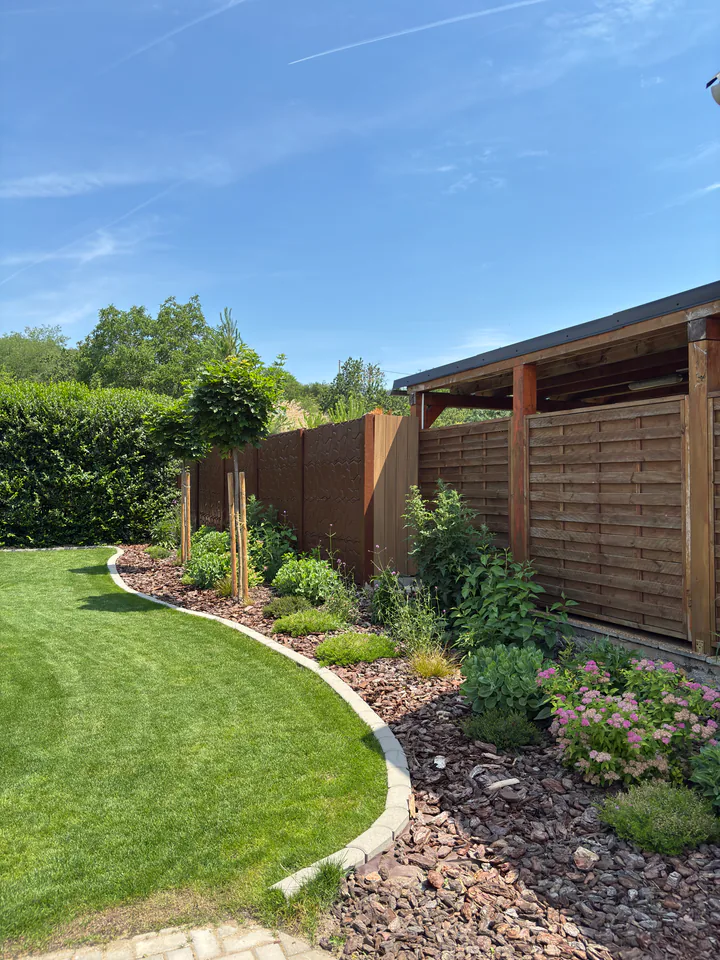
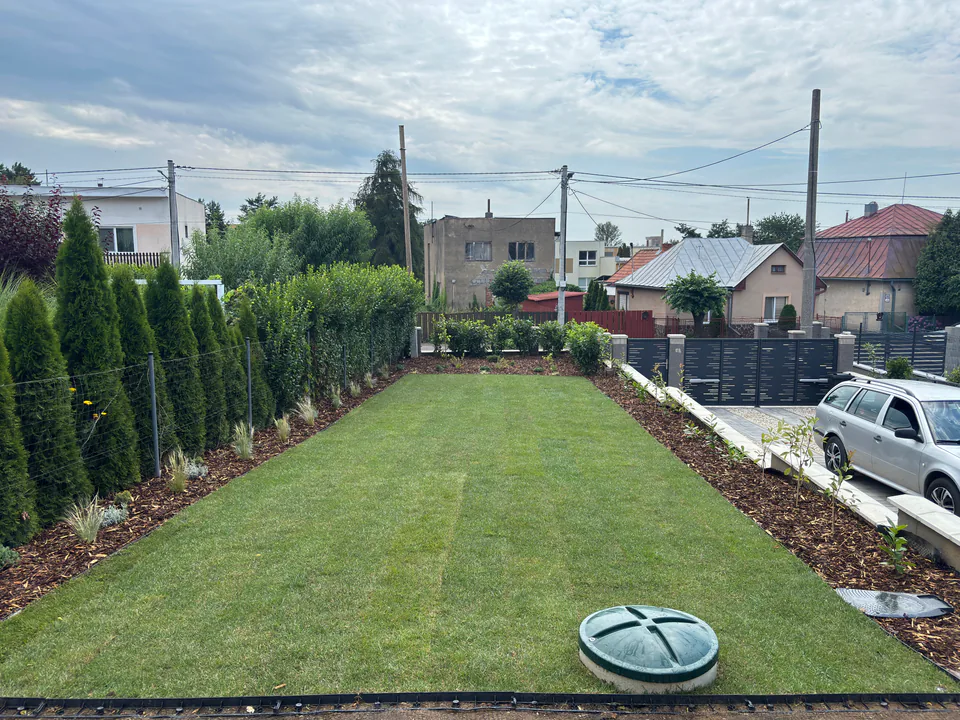
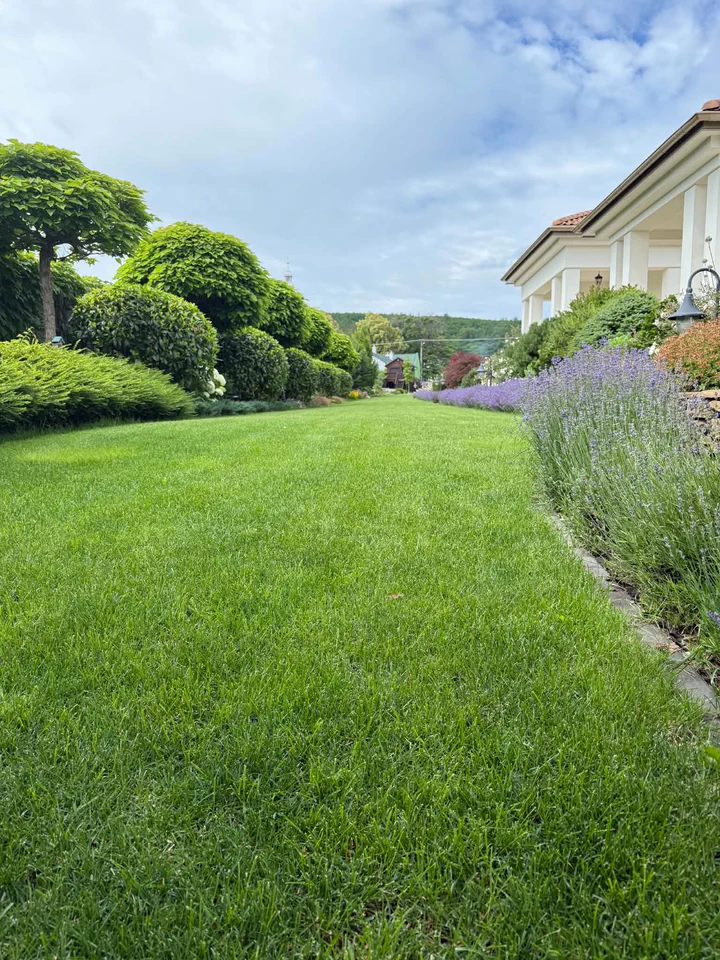
The archive doesn't yet have dedicated shots of irrigation hardware — so instead we show three results that well-set irrigation holds through the dry months: a dense, evenly green lawn, from the project archive.
Related services
Contact
An irrigation design starts with a short conversation. Write to us via the contact form or call +421 905 220 216.
Last updated: 21 August 2026